
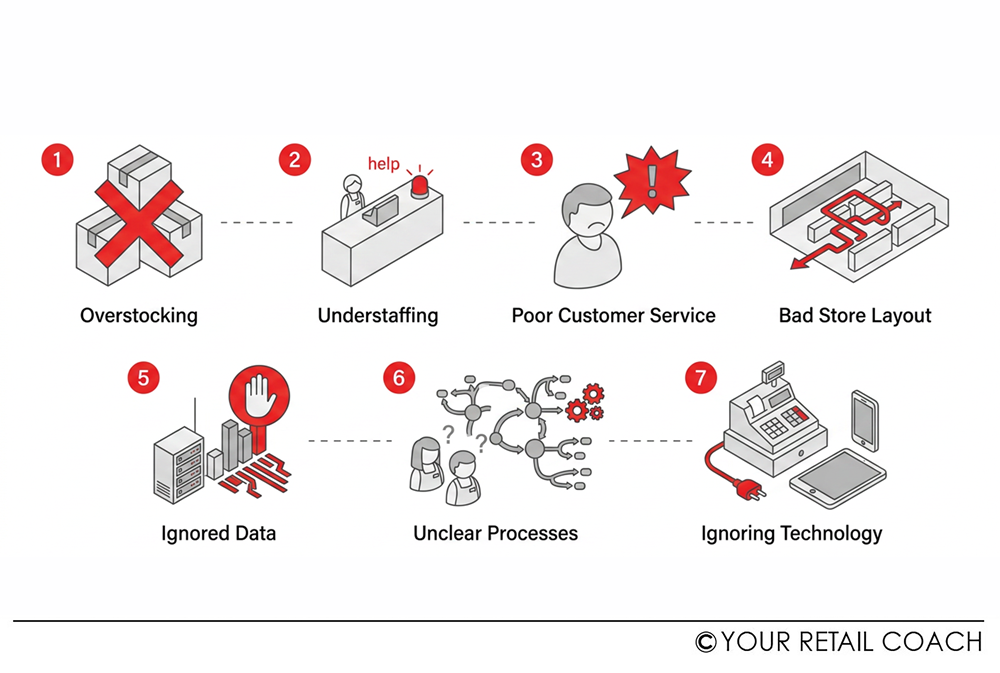
When Rahul expanded his business he knew things would get tough. He thought he would struggle with growth and competition. He also thought it would be tough to find the right people to work for him. What really surprised him was that a lot of his problems came from inside his own stores. Even though his stores were in locations and a lot of people wanted to shop there they were not doing well.
This is something that happens to a lot of businesses. A lot of people who own businesses think that things outside of their control are the problem. Usually the real problem is with how the stores are run. If a store is not run well it can cause a lot of problems. Small things that do not go right can add up and cause big problems over time.
The first step to making things better is to understand what is going wrong. If people who own businesses can figure out what is going wrong and fix it they can make their businesses run more smoothly. They can also make their customers happier. Make more money without needing more people to come into their stores. Retail business owners can do this by looking at their store management and operations management, in retail stores and making changes to make them better.
1. Not Having All Channels Working Together
One of the mistakes Rahul made was thinking that the internet and physical stores were two completely different things. People saw things online and in the store, which was confusing.
These days stores need to have everything working together like one team. When things do not work together it makes people unsure. They do not trust the store.
Some of the problems are:
- Prices or what products are available are different in places
- You cannot buy something and pick it up in the store or have a smooth shopping experience
- The message about the brand is not the same everywhere
Stores need to make sure that what happens on the internet and in the store is the same. When all channels work together customers can interact with the brand easily which makes them happier and helps the store sell things. Omnichannel integration is important for retail.
2. Inventory Management Issues
Rahul often had problems with products being out of stock. At the time slow-moving items took up too much storage space. This imbalance hurt sales.
Inventory management is a problem in retail stores. When stores do not restock and track products well they lose sales. Spend more money.
Some key problems are:
- Products being out of stock and missing out on sales
- Much stock leading to extra costs for storage
- Not knowing what is in stock in real time
Research shows that many times products are out of stock because of poor restocking practices. Good inventory control makes sure products are available. It also helps stores use their money wisely.
3. Poor Use of Customer Data
Rahul collected customer data. He did not use the customer data effectively. It was rarely used to make good decisions. As a result his marketing decisions and product decisions were often based on what he thought would work rather than what the customer data actually showed.
Customer data is very important for people who run stores. If you do not use the customer data you will miss out on chances to make the shopping experience better for each customer. You will not make good decisions.
Some common mistakes that people make include:
- Not looking at what customers buy
- Not seeing what products are popular
- Not talking to customers in a way that’s personal
Without using the customer data to make decisions retailers have a hard time understanding what customers really want. If retailers use the customer data it can really help improve sales and make customers happy with their experience at the store.
4. Outdated Technology and Systems
Rahul used to do things and relied on old systems for reporting and managing inventory. This made things move slowly. Old technology is a problem in managing a retail store today. It makes it hard to see what’s going on, slows down making decisions and makes work less efficient.
Some signs that technology is outdated are:
- No updated reporting
- Lots of workarounds
- Systems that don’t work well together
Retail stores today need systems that work well together to support operations and sales. Updating technology makes things more accurate, reduces the workload and helps make decisions.
5. Weak Security and Risk Management
Rahul did not think about security until something bad happened to him. He had a problem with his data and it made his customers lose trust in him. People who own stores have to worry about things happening in their stores and online.
Some things that people who own stores should worry about are:
- Cybersecurity vulnerabilities
- Not following the rules, about keeping customer data safe
- Not watching what is going on in their stores
Stores need to be careful and make sure they have security. This will keep the store and the customers safe. Retailers must make sure they have security to protect their Retail businesses and customer trust. Retailers need to have security to protect their retail businesses.
6. Stores That Do Not Adapt
Rahul’s stores have a problem. They do a lot of things the same way every time. This makes it hard for them to do what the customers want when they want it. Rahul’s stores have trouble keeping up with customer demands.
To be successful in retail stores need to be able to change and adapt. They need to be able to do things when the customers want something different.
Some things that make it hard for stores to adapt include:
- They have to keep the staff all the time
- They take a time to do things when the customers want something different
- The staff and computers are not able to move and do things in different ways
When stores can adapt and change they can do what the customers want. This makes the customers happy.
7. High Costs From Not Doing Things Right
Rahul had sales but he was not making as much money as he wanted to because his costs were very high. This was because he was not doing things in the way and this added up over time.
When stores are not managed well it can cost a lot of money. If the store is not laid out in a way or if the systems are old or if there are problems with the inventory it can cost more and more.
Some of the reasons, for these high costs are:
- Paying workers too much because their schedules are not planned well
- Stores that are not laid out in a way, which means people have to work harder
- Spending a lot of money to fix systems
If Rahul can find ways to do things better he can make more money. Even small changes can save him a lot of money over time. Reducing the things that are not working well can really help Rahul’s business. High operational costs, like the ones Rahul is dealing with can be lowered by making some changes.
Why YRC
Through a methodical and execution-focused approach, YRC assists retailers in identifying and closing important gaps in operations management and retail store management.
YRC offers:
- Comprehensive evaluation of store operations to identify inefficiencies affecting performance
- Standardized process design and execution to increase control and consistency
- Combining sales and retail management to match operations with revenue targets
YRC focuses on workable solutions that boost retail enterprises’ profitability, productivity, and store performance in quantifiable ways.
FAQs
What are the common mistakes that retail store managers make?
Some common mistakes that retail store managers make include managing inventory poorly, not having a good system that works across all channels using old technology and having operations that are not efficient. These mistakes make the store less efficient, affect the experience of the customer and ultimately hurt how well the store does and how money it makes.
How does managing inventory affect how well the store does?
Why is it important for retail stores to have a system that works across all channels?
How can retail stores cut costs?
What role does technology play in managing a retail store?
Technology helps stores by giving them a clearer picture of what is going on, automating tasks and helping them make decisions based on data. It helps retail stores manage things efficiently and respond quickly to changes in the market which is really important for retail stores like Walmart or Target or any retail store for that matter, such as retail store management.